
By Bridget Goldschmidt and Featuring Kurt Burmeister, SVP of National Sales and Importing at KLT Global & Lipari Foods
The Shift Toward Global Flavors is Driven by Specific Demographic and Behavioral Changes
As consumers seek novel flavors, brands and retailers are stepping up by offering them the world – in the form of products inspired by various international cuisines. But what are the factors influencing this shift toward global foods?
“At a high level, global-inspired foods are outperforming many center store and frozen category averages, with growth fueled by a mix of demographic, behavioral and structural factors,” notes Sally Lyons Wyatt, Global EVP and Chief Advisor, consumer goods and foodservice insights at Chicago-based market research firm Circana.
“Younger, more diverse consumers are a primary driver. Gen Z and Millennials over-index on global flavors and are more willing to experiment across cuisines, particularly in frozen and prepared foods. At the same time, the continued growth of Hispanic and Asian populations in the U.S. is increasing baseline familiarity and driving repeat demand, not just trial.”
Wyatt adds: “We are also seeing lasting impact from pandemic-era behaviors. What began as at-home experimentation has evolved into a more permanent shift, with consumers seeking restaurant-inspired global flavors at home, but with convenience, value and consistency. Frozen meals, simmer sauces and ready-to-use components are benefiting disproportionately.”
The types of products that tend to do best, she observes, are those that “combine flavor adventure with convenience, portion control, and often better-for-you cues such as protein, vegetables and less processing.”
Seeking the ‘Sensory Payoff’
As for the flavors that are generating the most excitement among consumers, Wyatt says: “Consumers gravitate toward cuisines that deliver a clear sensory payoff, whether that is chili heat, fermented tang, layered sauces or sweet-heat combinations. This shows up strongly in growing interest in Mexican, Latin American, Southeast Asian, Korean, and, increasingly, Caribbean and African flavor profiles.”
“U.S. consumers are increasingly seeking bold, globally inspired flavors that deliver both intensity and authenticity, from spice-forward profiles like Korean barbecue and chili lime to savory, umami-rich tastes like garlic parmesan, miso and teriyaki,” notes Tyler Averett, Category Manager at Naperville, Ill.-based distributor KeHE. “The demand also extends beyond flavor to entirely new formats and ingredients rooted in traditional cuisines. Ingredients like chamoy, chimichurri, fish sauce and jollof are gaining mainstream traction, signaling sustained consumer curiosity.”
According to Kurt Burmeister, SVP of National Sales and Importing at KLT Global, a distributor of premium brands, and its parent company, Warren, Mich.-based Lipari Foods: “U.S. consumers are most interested in global foods that deliver authenticity, convenience and discovery. They want bold, differentiated flavors, but they also want products they can understand, prepare easily and incorporate into everyday meals.” He goes on to identify particular interest in “Mediterranean, Indian and Asian products that allow consumers to ‘travel through food’ without having to fully learn a new cuisine from scratch.”
“At the same time, adoption accelerates when those flavors are delivered in familiar formats,” Wyatt points out. “Bowls, frozen meals, sauces, snacks and handheld items lower the barrier to entry compared to more traditional preparations that require culinary confidence. Frozen options, shelf-stable sauces and snackable items play an outsized role here, particularly among younger consumers.”
Snack Time
Speaking of snacks in particular, many brands are focusing on such items as a way of introducing consumers to new tastes.
“Snacks play a critical role in accelerating the adoption of global flavors in the U.S., offering consumers a low-cost, low-commitment way to explore new cuisines and ingredients,” affirms Averett. “At KeHE, we see snacks frequently leading the way in innovation, given that they typically have shorter development cycles, enabling brands to bring emerging trends to market faster than other categories.”
He continues: “Their accessibility, especially in popular single-serve and smaller-format pack sizes, drives impulse purchases, making them an ideal entry point for discovery. This is reinforced by consumer sentiment, with many shoppers viewing snacks, particularly frozen options, as an approachable way to experiment with new flavors and cuisines, helping pave the way for broader adoption across the store.”
“In the age of TikTok and social media, snacks are often the first point of discovery,” says Alice Chen, CEO of Buena Park, Calif.-based 99 Ranch Market, a chain of Asian grocery stores. “Viral videos frequently feature unique international snacks, which quickly sparks curiosity and trial, especially among younger consumers. We’ve seen products like Buldak spicy noodles, Japanese DIY candy kits, freeze-dried fruit snacks and unique Asian chip flavors gain attention online and drive people into stores looking to try them for themselves. We are also seeing strong demand for bold and spicy flavor profiles, particularly among Gen Z consumers who are eager to explore new tastes. Items such as mala (Sichuan peppercorn) flavored snacks, chili crisp peanuts, spicy seaweed snacks, and extra-spicy instant noodles have been gaining traction.”
As interest rises, international snack makers are seeing their chance to make their mark in America.
“As the category leader in Asian salty snacks, Calbee is uniquely positioned through its authentic Japanese heritage,” asserts Melanie Plaz, VP Marketing and R&D at Fairfield, Calif.-based Calbee America Inc. “Products like Calbee Shrimp Chips, which generations of Japanese consumers have grown up with, have been enjoyed across Asia for over 60 years, introducing consumers to a distinctly Japanese snacking experience. Takoyaki Ball brings the flavor of Japan’s iconic street food into a crunchy, poppable format, while our Asian Style Chips expand that global exploration by translating bold flavors like Thai curry, Chinese hot pot and Korean barbecue into a familiar chip experience.”
Plaz adds: “We’re continuing to build on that momentum with new innovations: We are just launching Roasted Miso & Garlic Potato Chips, which leverage growing interest in ingredients like miso, and Takoyaki Ball Kimchi Cheese, inspired by one of Japan’s most popular takoyaki toppings.”
Emerging snack flavors aren’t all from Asia, however.
“We grow and process our coconuts in Nigeria, using simple, familiar ingredients to create snacks that feel both new and approachable,” explains Ebun Feludu, Founder and CEO of Lagos-based Kókárí Coconuts. “Our products carry the texture, flavor and integrity of where they come from while still fitting naturally into everyday snacking occasions.”
“In sweets and snacks, the best-performing products tend to pair recognizable bases with globally inspired twists, like a mango [and] chili flavor,” says Daniel Mohnshine, VP Demand Creation Strategy and Innovation at The Hershey Co., in Pennsylvania, and Feludu’s mentor. “These snacks perform best when they are anchored to clear occasions like on-the-go, sharing or permissible indulgence.”
When it comes to placement strategy, Mohnshine advises: “The most effective approach is to integrate globally inspired snacks into core shopping journeys, rather than isolating them. In-store, that means merchandising alongside familiar categories, supported by secondary placements or seasonal features that encourage trial.”
What’s most crucial, however, is for a globally flavored snack to retain its authenticity even as it moves into the mainstream. For such an item, “its differentness is both its challenge and its appeal,” cautions Evan Gettinger, Principal at CBX, a New York-based brand strategy and design agency that has worked with Kókárí. “Since snacking in the U.S. is often associated with both comfort and indulgence, it’s important that the product clearly and familiarly fit into an existing usage occasion while providing a variant that brings enhancement to that moment.”
Be Prepared
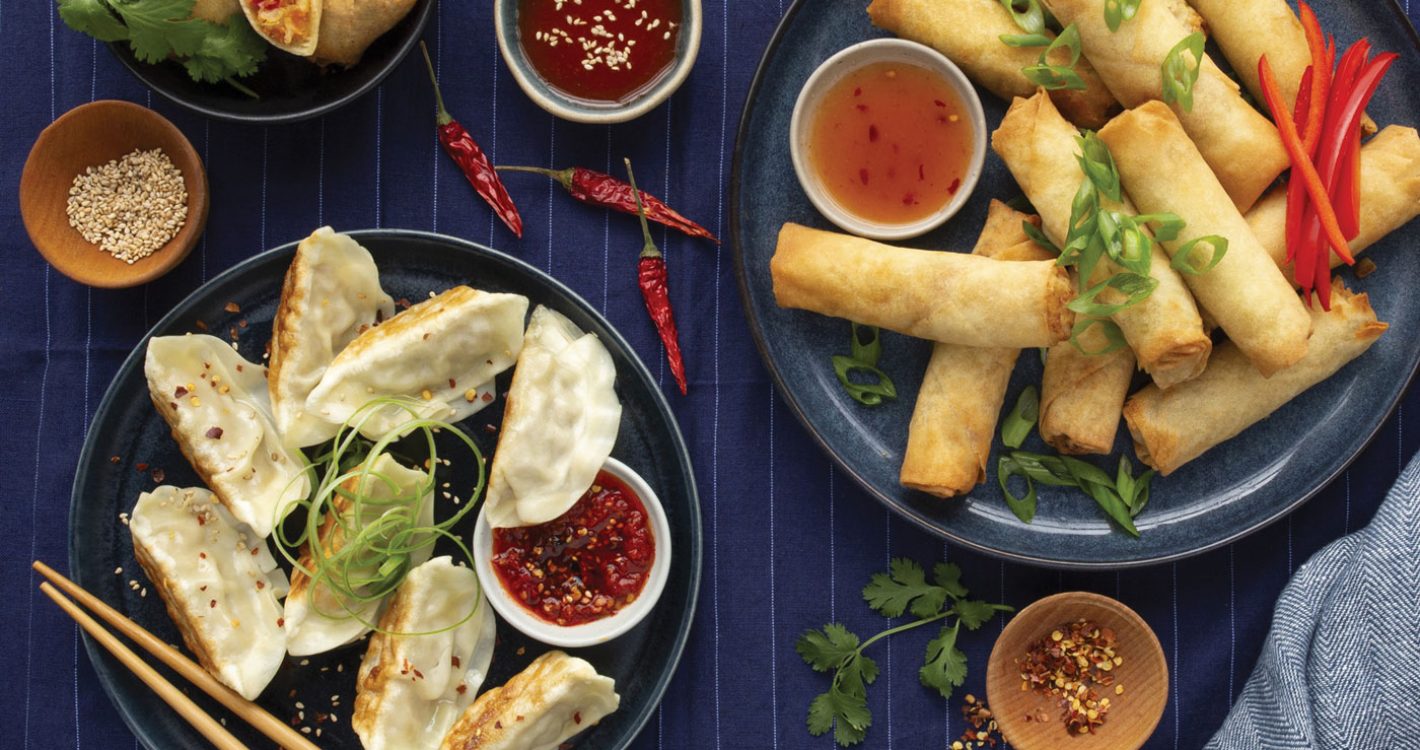
 Meanwhile, SUMM! Asian finger foods are carried in the refrigerated deli case – a deliberate decision, according to Jason Longden, CEO of Richmond, British Columbia-based Fine Choice Foods, owner of the brand, whose name means “heart” in Cantonese.
As Longden notes: “[T]hat positioning is a statement about the product, not just a merchandising decision. Being in deli means we’re competing on quality against the best prepared foods a retailer carries, and we have to earn that placement every day. Our products are built around traditional recipes and locally sourced produce wherever possible, because the integrity of the flavor depends on the integrity of the ingredients. A Thai Basil Chicken Spring Roll or a Sesame Ginger Chicken Gyoza that tastes the way it’s supposed to taste is the only marketing we ultimately need.”
He also finds the term “appetizer” too limiting for the brand’s product portfolio. The lineup “is … deliberately range-building — from Cantonese-style spring rolls to gyoza to lumpia and, most recently, our BBQ Pork Bao Buns — because we believe Asian foods belong across all meal occasions and dayparts, not just as an appetizer or a side,” Longden explains. “That versatility is something retail partners have responded to, and it reflects how our consumers are actually using these products.”
Those hoping to draw customers to unfamiliar global offerings need to broaden their reach, he adds.
“For brands and retailers looking to accelerate trial in any emerging global cuisine, the playbook is consistent: Get out of the ethnic aisle and into the high-traffic deli and prepared foods space where discovery happens,” Longden counsels. “Invest in digital retail media — help consumers find us. Partner with creators who have genuine cultural authority in that cuisine. And tell the story behind the food with specificity and respect. The difference between a product someone tries once and a product that earns a permanent spot on the weekly list is almost always whether the brand made the consumer feel something beyond just fed.”
Not-So-Secret Sauce and More
 Beyond the ever-popular snacking occasion, a number of companies are bringing global flavors to other sections of the supermarket, including the condiment aisle.
“Sky Valley isn’t here for safe, watered-down ‘global flavor,’” asserts Caroline Creasey, Brand Manager for the Danville, Va.-based sauce, dressing and condiment maker. “We’re here for the kind that hits hard and keeps things interesting. Our plant-based, gluten-free sauces are built with real ingredients and bold inspiration from cuisines around the world, reimagined with zero restraint. From the herby heat of Green Sriracha to the sweet-heat swagger of Mango Habanero, we don’t settle for expected. We remix. Pour it on pizza. Drizzle it on dumplings. Drench whatever’s on your plate. Around here, flavor doesn’t follow rules, and neither do you.”
To help it stand out even more on the shelf, Sky Valley recently updated its look and feel “with color-drenched packaging and bold food photography that makes flavor impossible to ignore,” Creasey notes.
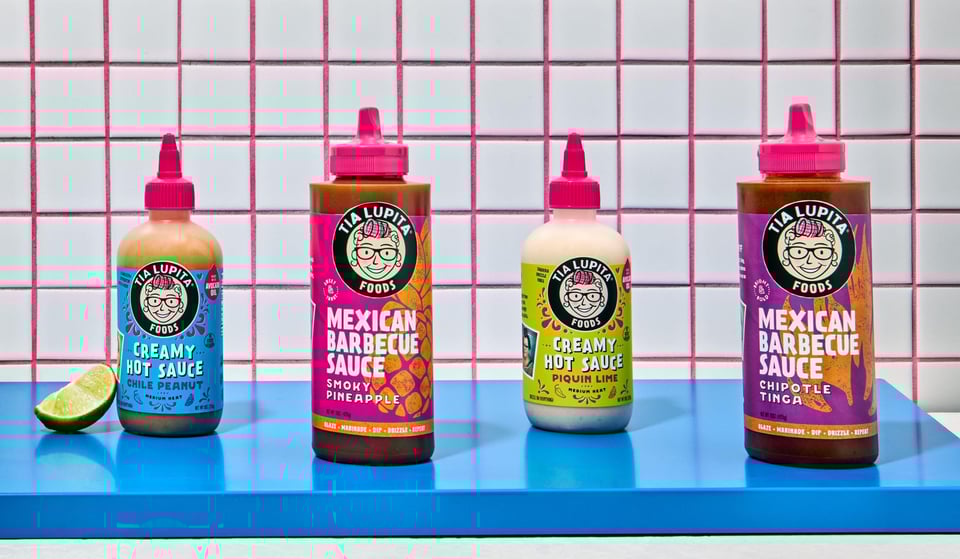
“What we’re seeing is this shift from ‘exploration’ to what I’d call ‘everyday global,’” observes Hector Saldivar, Founder and CEO of Tiburon, Calif.-based Tia Lupita Foods. “People don’t want a special-occasion product, they want something they can use on a regular basis that just makes their food taste better without a second thought. … We’re not trying to educate consumers on Mexican cuisine, because they’re already familiar with it. What we’re bringing is real Mexican flavor into formats they already use, like barbecue sauce, hot sauce and dips. It’s authentic, but it’s also accessible. That combination is what we see resonating right now.”
On the subject of attracting customers to such products, Saldivar advises: “A big unlock is cross-merchandising. When you place a Mexican-inspired barbecue sauce in the grilling set or a creamy hot sauce next to prepared foods, you’re immediately showing the shopper how it fits into their routine. That’s where you see lift. The other piece is clarity on the shelf. You have to communicate usage fast — ‘glaze, marinade, dip, drizzle.’ If a shopper has to think too hard about how to use your product, you lose them.”
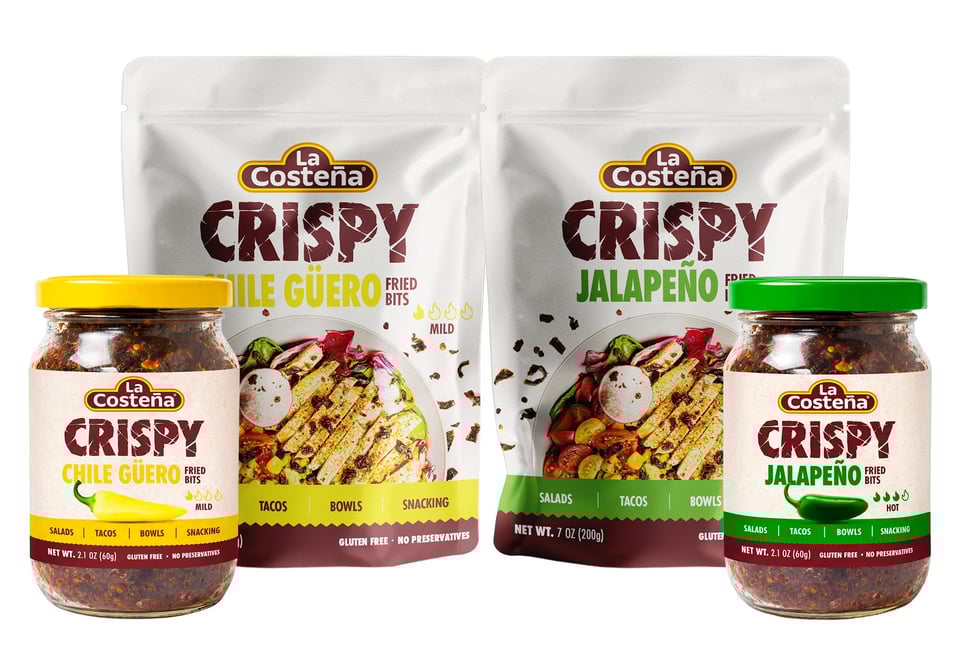
At La Costeña, a Mexican brand offering authentic, high-quality ingredients like jalapeño peppers, salsas and beans, it’s about giving shoppers vibrant flavor options for their home-cooked dishes.
“Retailers can drive engagement by merchandising La Costeña products as meal solutions and enhancers rather than niche items,” suggests Edgar R. Vargas, Director of Growth and Brand Development at Laredo, Texas-based Vilore Foods, which imports, distributes and markets La Costeña and other leading Hispanic brands from Mexico. “In-store, this includes cross-merchandising La Costeña products with proteins, snacks and ready-to-eat items, supported by recipe-driven displays, digital content and sampling to drive immediate trial.”
Another option for intrepid eaters is Middle Eastern food.
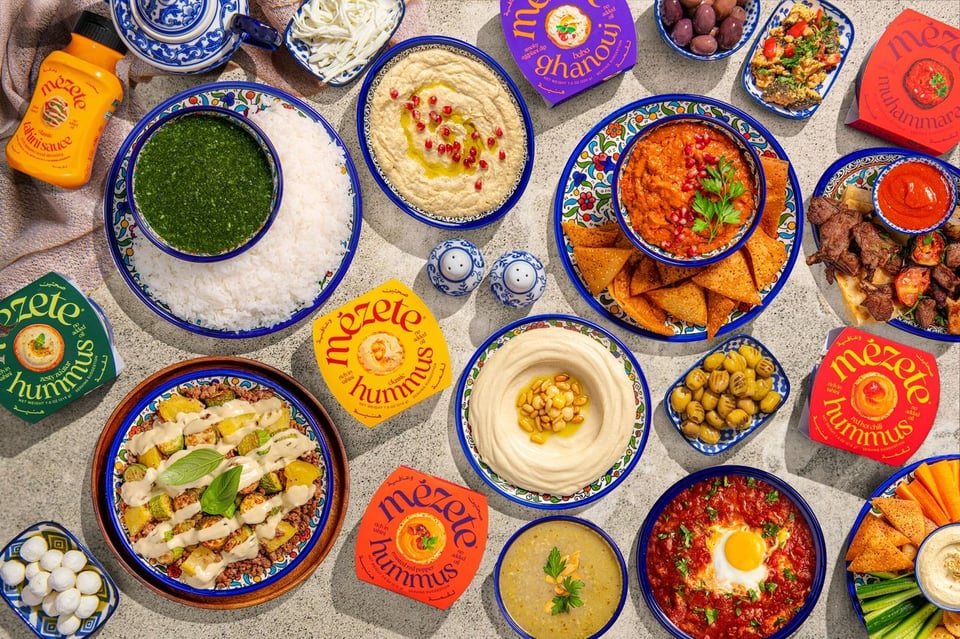
“Middle Eastern/Mediterranean is one of the fastest-growing global food platforms in U.S. retail, outpacing conventional food growth, with hummus already a $1 billion-plus category and adjacent Mediterranean retail segments also growing ahead of the market,” notes Mark Pataky, International General Manager at Amman, Jordan-based MEZETE, a maker of dips, sauces and soups.
“Sampling will be key for both brands and retailers so consumers can experience the full range of products,” Pataky adds. “Consumers don’t know where to find and purchase Middle Eastern foods in their retailers. Trend-forward retailers who are carving out international sets in their stores and creating destination sets will be able to capture these incremental food purchases. Most retailers have a Hispanic and Asian set, but the retailers who are creating Mediterranean/Middle Eastern sets will be able to attract premium shoppers who are willing to spend more.”
Frozen Fare
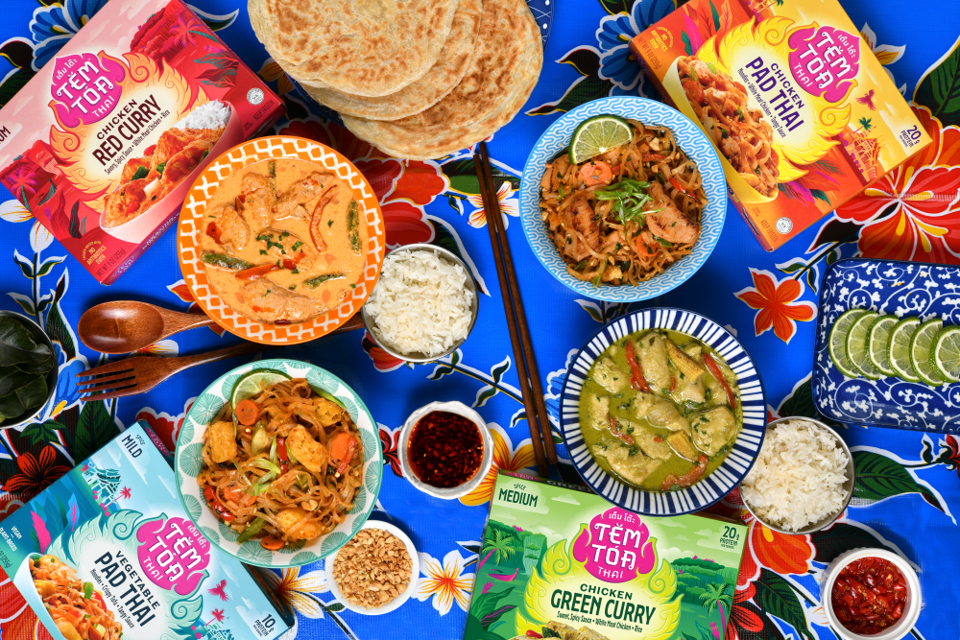
 Deep Brands, maker of Deep Indian Kitchen, a leading frozen Indian brand in the United States, is building on that success with the launch this month of Tem Toa, a new premium authentic frozen Thai brand.
“Like Deep Indian Kitchen, Tem Toa combines a digitally native approach and modern, experiential branding with chef-driven, made-from-scratch quality for an underserved yet popular global cuisine,” says Kiernan Laughlin, General Manager of Union, N.J.-based Deep Brands. “Tem Toa [makes] it easy for people to enjoy a bold, balanced and authentic flavor experience at home in minutes.”
Although it’s one of the most popular restaurant cuisines, “making Thai authentically is difficult and time-consuming” for consumers, Laughlin admits. “That mix of popularity, complexity and white space creates a perfect opportunity for brands to bring Thai cuisine into homes in an accessible way.”
Deep Brands also helps retailers position its frozen products for maximum success.
“Dedicated custom marketing and merchandising is critical for premium global flavors, because both the No. 1 purchase driver and purchase barrier is awareness,” Laughlin notes. “Our insights team has conducted many proprietary global flavors research studies, including shopper decision trees, planogram optimizations, drivers and barriers, and even category naming. We’ve also partnered with several retailers to put these insights into action in stores with tailored planograms; signage at shelf calling out ‘Indian’ or ‘International Flavors,’ for example; and themed promotions around seasonal events like Diwali.”
Where’s Next?
 Since, as Pataky, points out, “Global foods is still in its infancy stage in the U.S., and we anticipate several years of tremendous growth,” where do industry observers think this growth will come from?
Circana’s Wyatt points to the following:
- African cuisines, (specifically West and East African): Flavors like peri peri, berbere and suya align with consumer interest in heat, spice and grilled profiles, yet remain underrepresented at retail, creating significant white space.
- Caribbean and Afro-Caribbean flavors: Jerk, island spice blends and tropical heat profiles are gaining traction as consumers seek escapism and bolder flavor experiences.
- Regional Indian and Southeast Asian cuisines: Consumers are moving beyond generic “Indian” or “Thai” toward more regional expressions, particularly in sauce-forward formats that make trial easier.
“We’re seeing early momentum in more regional and nuanced flavor profiles such as Sichuan-inspired snacks and Eastern Mediterranean seasonings like za’atar,” KeHE’s Averett says, adding: “The key to driving trial is making these flavors approachable through familiar formats, clear flavor cues and strong storytelling that educates consumers without overwhelming them. Social media is a strong tool for enticing consumers, and strategic merchandising, such as cross-category placement and sampling where possible, can further encourage discovery.”
“I believe several cuisines are especially well positioned for further breakout growth in the U.S., including regional Asian cuisines, Middle Eastern flavors, African cuisines and more nuanced Latin regional offerings beyond what has traditionally been mainstreamed,” KLT Global’s Burmeister notes. “Consumers are becoming more educated and more adventurous, and that opens the door for cuisines with distinctive flavor profiles, strong culinary traditions and versatile everyday applications.”
“Filipino cuisine in particular has seen extraordinary momentum … driven by a large and culturally proud Filipino American community and a wave of creator content that has reached well beyond that community to a genuinely broad audience,” Fine Choice’s Longden asserts. “It’s a cuisine with deeply compelling flavor stories and formats that map naturally onto the snacking and entertaining occasions that drive deli appetizer sales.”
What’s more, “Southeast Asian cuisines more broadly — Indonesian, Malaysian, Vietnamese beyond the pho moment — represent the next wave of restaurant-driven consumer education turning into retail demand,” he predicts. “The TikTok food content around these cuisines has been building steadily, which historically precedes retail pull-through by 18 to 24 months.”
“Global flavor isn’t a passing trend, it’s table stakes,” Sky Valley’s Creasey insists. “Today’s sauce lovers are exploring beyond the expected, embracing influences from Korean, Middle Eastern, Mediterranean and globally inspired cuisines that bring depth, heat and complexity to everyday meals.”
The unexpected will certainly include international mashups.
“I think it’s less about one cuisine and more about how cuisines are coming together,” Tia Lupita’s Saldivar observes. “Fusion is a big driver we see. Mexican with Korean, Japanese, Southeast Asian flavors. That’s where we are seeing a lot of excitement, because it feels new but still approachable. Korean food took off when it became tacos; sushi became approachable and convenient when it became a sushi burrito. …
“At the same time, there’s a shift toward more specificity. Consumers are moving beyond broad labels and getting interested in regional dishes and ingredients. For brands and retailers, the playbook is pretty clear: Lead with flavor, make the use case obvious and reduce the risk to try. That could be through sampling, sharper merchandising or tighter on-pack messaging. If it tastes great and fits into how people already eat, you’re going to win.”